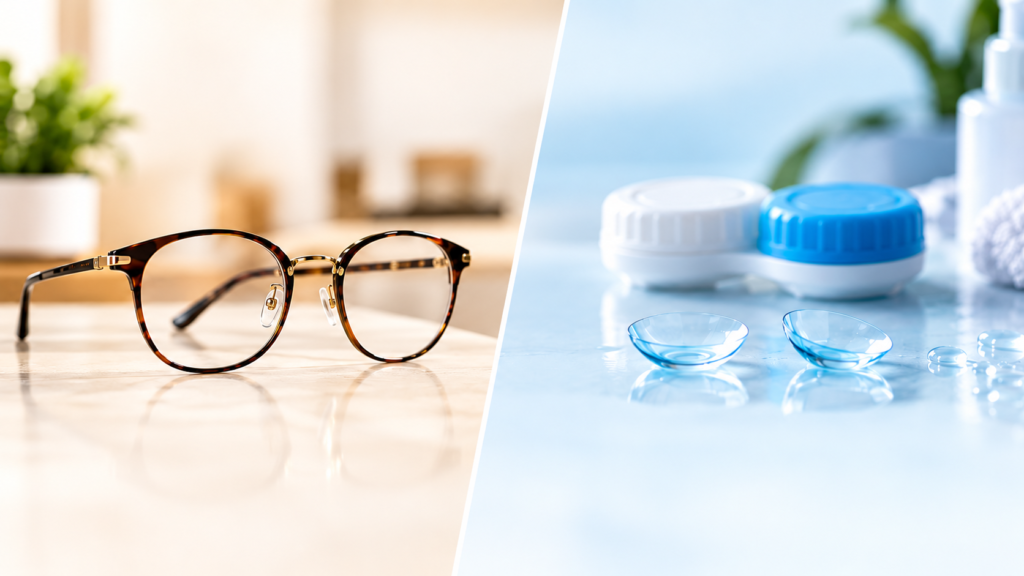
Buying eyeglasses online gives you plenty of styles and prices to choose from. But finding a pair that fits comfortably and suits your prescription takes more than picking a frame you like. Here’s what to check before placing your order.
Start With Your Prescription, Not the Frame
It’s tempting to browse frames first. Most people do. But your prescription helps determine which lenses you need, so keep it handy before choosing a pair.
Look at the prescription from your eye care professional. You may see OD for your right eye and OS for your left eye. You may also see PD, which stands for pupillary distance — the distance between the centres of your pupils.
Keep these points in mind:
- Check the date: Prescription validity rules vary by location. If yours is old, check whether it is still valid before ordering.
- Use your current prescription: Your eyesight may have changed since you bought your last pair.
- Confirm unclear details: If PD or any other number is missing or confusing, contact your eye care professional or the retailer for guidance.
This guide covers the buying process, not diagnosis or prescription advice. An eye care professional can help with questions about your vision.
Find Your Frame Size From Glasses You Already Own
Here’s a simple way to reduce the guesswork. Pick up a pair of glasses that already fits comfortably and look inside one of the arms. You may find numbers such as 52-18-140.
| Measurement | What it means |
|---|---|
| 52 mm | Lens width |
| 18 mm | Bridge width — the part that rests on your nose |
| 140 mm | Temple length — the arm of the glasses |
If your current pair fits well, look for frames with similar measurements. Small differences may be fine, but the overall width, bridge fit and temple length all matter.
What if you don’t have an old pair?
Check the size guide on the product page. If a virtual try-on is available, use it to get a rough idea of how the frame looks. Remember that a virtual preview cannot guarantee a physical fit.
For example, a frame marked 56-16-145 has wider lenses and a narrower bridge than one marked 50-20-140. Even if both look similar online, they may sit quite differently on your face.
Pick a Frame Shape That Works for Real Life
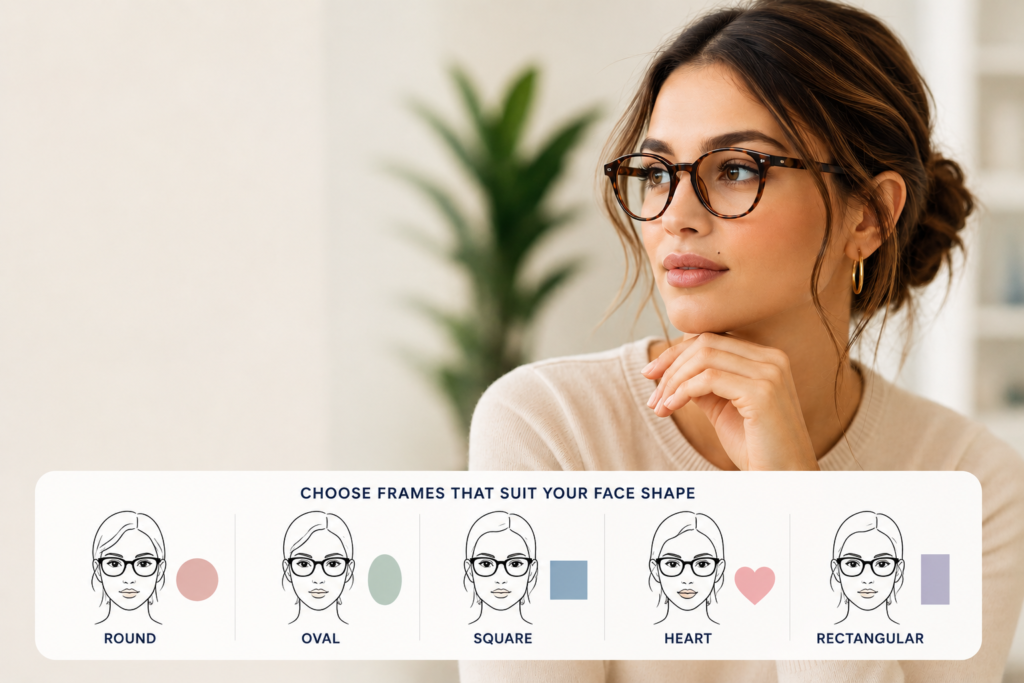
Face-shape charts can be a helpful starting point, but comfort and your everyday routine matter just as much. Think about where you’ll wear your glasses and how long you’ll have them on.
- Long hours at a screen: Consider lightweight frames that feel comfortable throughout the day.
- Work and meetings: Rectangle, soft-square and round frames can work well with a range of outfits.
- Stronger prescriptions: Ask about suitable lens designs and frame sizes. Smaller lenses may help reduce visible lens edge thickness in some prescriptions.
- Everyday wear: Check the nose fit, temple comfort and overall weight before making your choice.
Angular frames may complement softer facial features, while rounded frames can soften angular features. These are simply style suggestions, not strict rules. Choose a pair that makes you feel comfortable and confident.
Choose Lenses Based on How You Live
The frame gets most of the attention, but the lenses deserve careful consideration too. Your prescription and daily needs should guide your choice.
| Lens option | What to know |
|---|---|
| Standard plastic | A common everyday option for many prescriptions. |
| Polycarbonate | Lightweight and impact-resistant, often considered for children’s glasses and certain active uses. |
| High-index | Designed to be thinner than standard lenses for many stronger prescriptions. |
What about lens coatings?
- Anti-reflective coating: Reduces reflections from the lens surfaces and can be useful for night driving and working under bright lights.
- Scratch-resistant coating: Helps protect against everyday scratches, although no lens is scratch-proof.
- UV protection: Check the lens specifications if you need protection from ultraviolet rays.
- Blue-light filtering: Evidence for benefits such as reducing digital eye strain remains limited. Don’t choose this feature based on marketing claims alone.
Not sure which option suits you? Think about how you’ll use your glasses and ask the retailer or your eye care professional to explain the available lens choices.
Read the Fine Print Before You Pay
Buying eyeglasses online is about more than choosing a frame. The store’s policies and customer support can make a real difference if something isn’t right.
- Returns and exchanges: Check the rules for prescription lenses and customised orders.
- Delivery times: Made-to-order prescription lenses may take longer than ready-made frames.
- Warranty: Understand what is covered, including frame defects and lens coating issues.
- Customer support: Look for clear contact information and helpful answers to product questions.
- Total price: Check whether lenses, coatings, shipping and other options are included in the displayed price.
Your Eyeglasses Buying Checklist
- I have a current, valid prescription.
- I have checked my frame measurements.
- The frame size and bridge look suitable.
- I understand the lens options and extra costs.
- I have checked the return and warranty policies.
- I know the expected delivery time.
Find Your Next Pair of Eyeglasses
Choosing eyeglasses online becomes easier when you focus on prescription details, frame measurements, lens options and store policies. Take a little time to compare your options before you order.
Explore Eyeglasses →