UV Protection Sunglasses: How to Pick a Pair You Can Trust
You’re standing at a stall, or scrolling a product page. Two pairs of sunglasses look almost the same. One costs four times as much. The cheaper one has darker lenses. Which one actually protects better?
Staring at the lenses won’t tell you much. Two pairs can look exactly alike and still behave very differently, which is what makes UV protection sunglasses confusing to buy. The part that matters just doesn’t show.
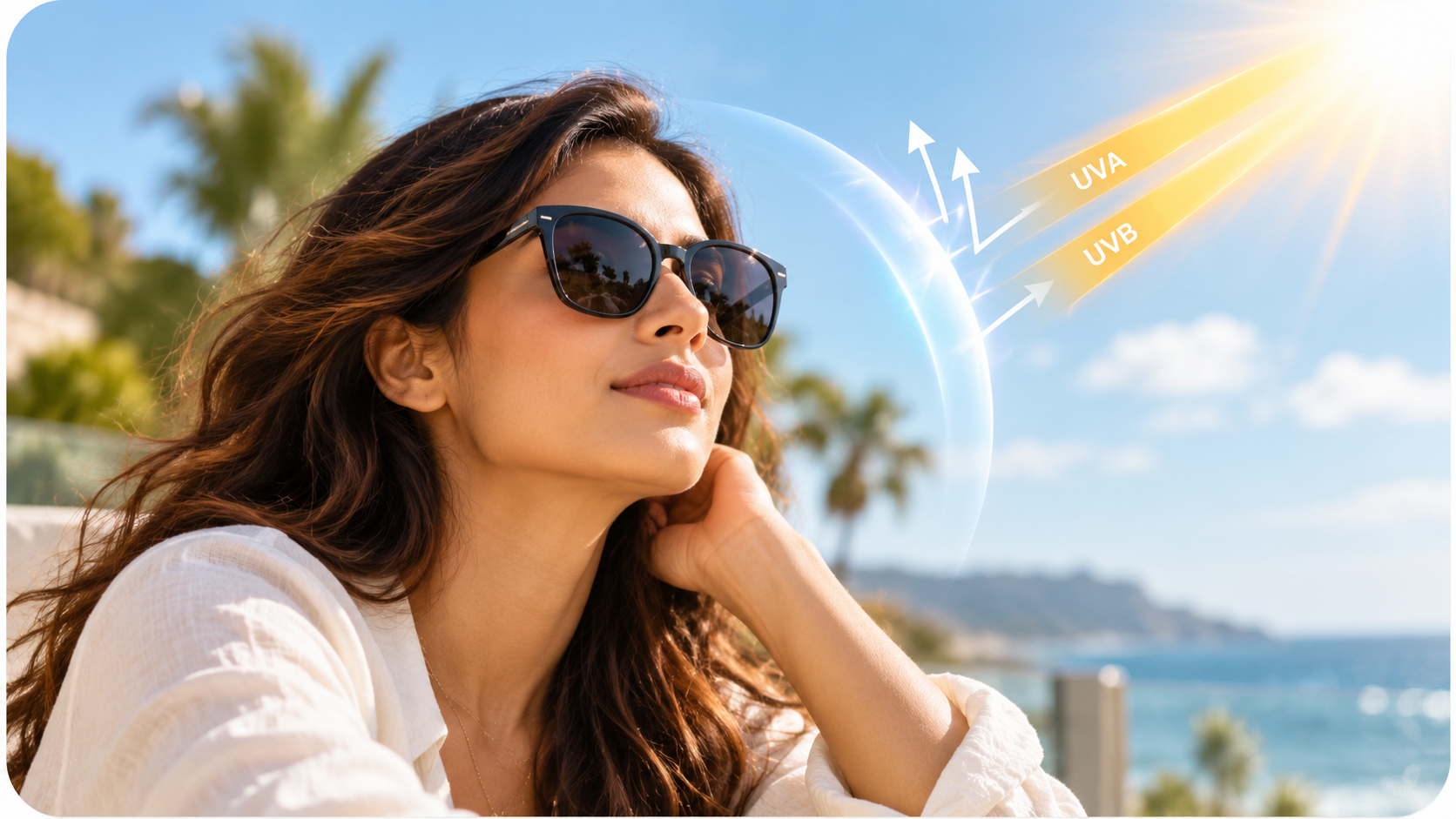
You want a pair that blocks both UVA and UVB rays. Check whether the tag, box or product listing uses words like UV400 or 100% UV protection.
Why Dark Lenses Can Fool You
Plenty of people believe darker lenses mean better protection. It’s an easy assumption to make, but it isn’t reliable.
How dark a lens looks is a separate question. Whether it blocks UV rays is another. Tint only changes the brightness you see, so a pale pair with a clear UV rating can be a better choice than a near-black pair with no rating at all.
So if a pair looks dark and moody, that tells you nothing yet. Check the label or the listing for UV information.
What’s the Deal With UV400?
You’ve probably seen “UV400” on a tag and wondered if it actually means anything. It does.
UV400 generally refers to lenses designed to block UV rays up to about 400 nanometres, covering both UVA and UVB. “100% UV protection” is another commonly used description for UV-blocking lenses.
You’ll find listings that only talk about “dark lenses,” “fashion sunglasses” or “stylish shades.” No mention of UV? Then you still don’t know.
Your first step is to ask the seller. If you’re still unsure, an eye-care professional can help you verify the information.
How to Choose the Right Pair
There’s no one pair that suits everybody. What works best depends on your daily routine and where you’ll be wearing them. These are the things worth checking.
The UV Label
Check the packaging or product page for UV400 or 100% UV protection.
Fit
The frame shouldn’t pinch behind your ears, press hard on your nose or slide down every time you move. If it’s uncomfortable, you’ll be less likely to wear it regularly.
Coverage
Larger lenses and wraparound shapes can provide more coverage and help reduce light entering from the sides.
Lens Clarity
Hold the glasses at arm’s length and look at a straight line, like a door frame or tile edge. Move them slowly. If the line bends or ripples, the lens quality may not be ideal.
Tint
Grey lenses generally keep colours looking natural. Brown and amber lenses can add contrast. Whatever you pick, remember that lens colour doesn’t determine UV protection.
Build
Check the hinges and the frame. A protective case can also help prevent scratches and damage.
Polarized or UV Protection: What’s the Difference?
These two features are often confused, partly because they are frequently listed together on sunglasses product pages.
Polarized lenses help reduce certain types of reflected glare, such as glare from wet roads or water.
UV protection is different. It is designed to block ultraviolet radiation from passing through the lens.
A pair can have both features, only one, or neither. So never assume “polarized” means “UV protected.” Check the UV label separately.
Which Sunglasses for Which Situation?
Driving
Medium grey or brown lenses can be a practical choice for daytime driving. They can reduce brightness while keeping the road and dashboard easy to see.
Polarized lenses may also help reduce certain types of reflected glare from wet roads and other surfaces.
Travel
Pick something comfortable that can survive a packed bag. A hard case or firm pouch can help protect the lenses from scratches.
Beach and Water
Sand and water reflect a lot of light. Larger lenses can provide more coverage, while polarization may help reduce certain types of glare.
Everyday Wear
Go for something lightweight that you can wear for hours without constantly adjusting it. Add proper UV protection for a practical pair of everyday outdoor sunglasses.
Children
Kids can wear sunglasses outdoors too. Check the UV label and choose a frame that fits securely so it doesn’t keep slipping.
Is a Pricier Pair Better at Blocking UV?
Not necessarily.
Price can reflect the brand, frame material, design and finish. It doesn’t tell you how much UV a lens blocks.
So rather than asking “How much is it?”, ask:
- Does it say UV400?
- Is the lens clear?
- Does it fit comfortably?
- Does it feel well made?
- Is the seller reliable?
Quick Checklist Before You Buy
- Is UV400 or 100% UV protection stated?
- Is the frame comfortable?
- Do straight lines stay straight through the lens?
- Does the tint suit where you’ll wear them?
- Do you need polarization for glare?
- Does the frame give enough coverage?
- Is the seller reliable?
Frequently Asked Questions
How can I tell if my sunglasses block UV?
Check the tag, packaging or online description for UV400 or 100% UV protection. If you’re still unsure, an eye-care professional may be able to test the lenses.
Do polarized sunglasses also protect against UV?
Not necessarily. Polarization helps reduce certain types of reflected glare, while UV protection blocks ultraviolet radiation. They are separate features.
Do darker lenses block more UV?
Not by themselves. Darkness and UV protection are different properties, so a dark lens isn’t automatically the safer one.
Can I wear regular sunglasses for driving?
Yes, as long as they provide appropriate UV protection and allow you to see the road and dashboard comfortably.
How long do sunglasses last?
There isn’t one fixed lifespan for every pair. If the lenses become badly scratched or the frame is damaged, replacing the sunglasses may be a sensible choice.
Final Takeaway
Shopping for UV protection sunglasses? Don’t let a nice colour, a big name or a high price decide for you.
Find the label first. You’re looking for UV400 or 100% UV protection. After that, think about the fit, lens clarity, coverage, tint and how you’ll use the sunglasses.
The right pair should give you a good balance of protection, comfort and style.
Protection first. Comfort second. Style always. 😎
Shop Sunglasses →